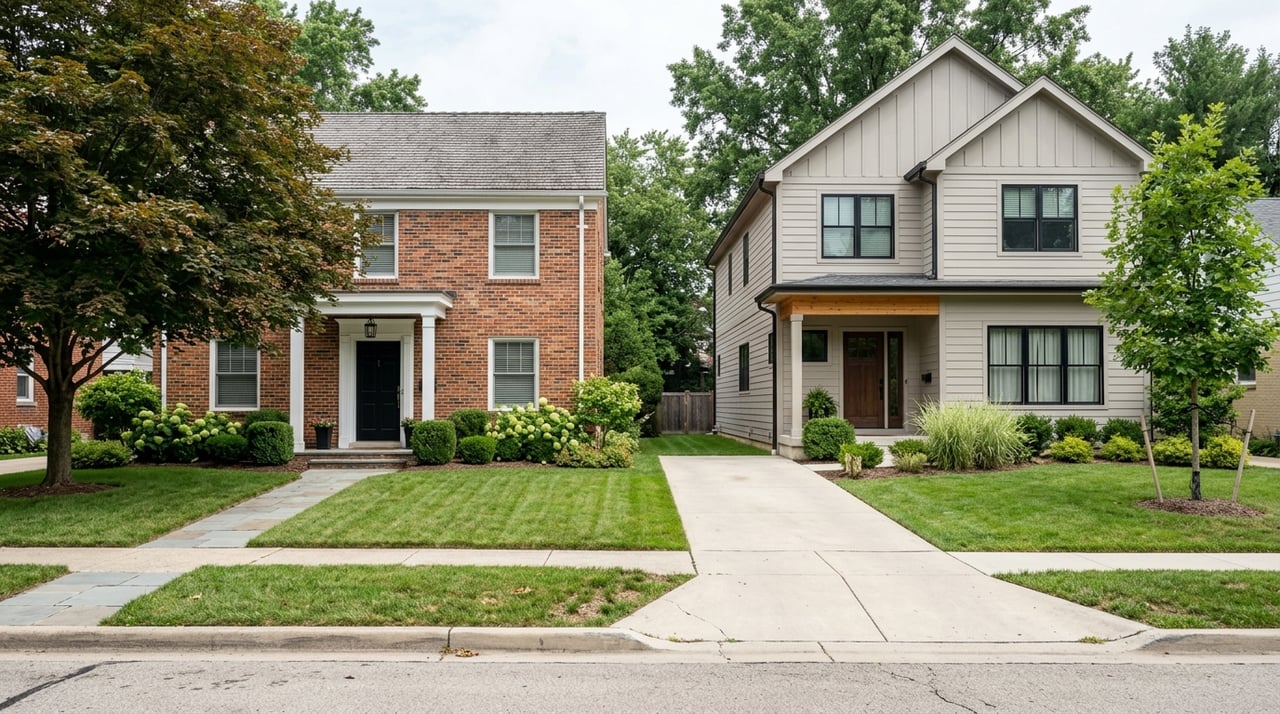
If you are trying to decide between a brand-new home and an existing one in Frederick County, you are not alone. In a market with limited inventory, rising prices, and demand for more housing, the right choice often comes down to how you want to buy, not just what you want to buy. This guide will help you compare new construction and resale homes in Frederick County so you can move forward with more clarity and fewer surprises. Let’s dive in.
Frederick County Housing Snapshot
Frederick County offers a mix of housing options, which is one reason buyers often find themselves weighing new construction against resale. According to the 2024 ACS county profile, the county had 113,223 housing units, with detached single-family homes making up 59.2% of the stock and attached homes accounting for 22.6%.
The market has also stayed very tight. Frederick County’s Livable Frederick 5-Year Annual Report shows the owner-occupied vacancy rate dropped to 0.4% in 2023, while the median sales price rose from $325,340 in 2019 to $456,299 in 2023. That helps explain why both resale homes and new construction can attract strong buyer interest.
Frederick County also needs more housing overall. The county says it will need 31,853 new housing units by 2035, which supports ongoing development while keeping competition active across the resale market too.
New Construction Basics
New construction in Frederick County is often tied to planned growth areas. County planning directs much of that growth into the Primary and Secondary Growth Sectors, including areas around Frederick and Brunswick, with an emphasis on compact, mixed-use development near transit, according to the county’s 5-year housing report.
That means many newly built communities may offer a more structured buying process, builder-selected floor plans, and standardized neighborhood layouts. It also means you should confirm practical details early, such as lot dimensions, HOA rules, and nearby infrastructure plans.
Maryland also gives new-home buyers specific consumer protections. The Office of the Attorney General explains that most builders and sales representatives must be registered with the state, and new-home contracts must include certain details such as the builder registration number and required consumer language.
What New Construction Often Offers
A new home can be appealing if you want a more predictable condition profile on day one. You are generally buying from plans and specifications, and Maryland’s new-home consumer guide recommends comparing the model home carefully to what is actually promised in the contract.
Warranty coverage is one of the biggest reasons some buyers lean toward new construction. Under Maryland law, express and implied warranties generally cover the home for one year, with structural defects covered for two years unless the contract provides longer coverage. If a third-party warranty plan is used, the state guide says minimum coverage levels generally include one year for workmanship and materials, two years for major systems, and five years for structural elements.
There is also an added layer of consumer protection through Maryland’s Home Builder Guaranty Fund, which can help with certain losses from registered builders up to $50,000 per claim.
New Construction Tradeoffs
The biggest tradeoff with new construction is timing. A home may not be ready when you first commit, and the state’s consumer guide says your contract should clearly state the start and completion dates, along with conditions that could delay delivery.
You also need to understand exactly what is included in the base price. Upgrades, lot premiums, and change orders can affect your final cost, so written detail matters. If you are comparing communities, this is one of the easiest places for confusion to happen.
Location factors matter too. Frederick County notes that development is concentrated in growth areas, and water and sewer planning is tied to Community Growth Area boundaries. Depending on where you buy, it is smart to confirm whether public water and sewer will be available at closing or whether well and septic service may apply.
Resale Home Basics
Resale homes offer a different kind of opportunity. In Frederick County, they can include everything from older established homes to more recently updated properties in a wide range of settings.
The county’s housing assessment shows that 19.1% of homes were built from 2010 to the present, but a large share of housing is older, including 35,738 units built before 1980. That age mix creates more variety for buyers, but it can also increase the chance that you will need to look closely at updates, maintenance, and long-term repair needs.
For some buyers, resale is appealing because the home already exists in its current setting. You can evaluate the floor plan, lot, finishes, and condition right away, and you may be able to move in faster than you could with a home that is still being built.
What Resale Homes Often Offer
One of the biggest advantages of a resale home is immediate visibility into what you are buying. Rather than selecting from plans, you can see the actual property, the street placement, and the condition of the home before you make a decision.
Maryland law also requires sellers of most single-family resale homes to provide either a disclosure statement or a disclaimer statement before contract. That form can include information about the roof, structure, plumbing, electrical systems, heating and air conditioning, water and sewer service, insects, land-use issues, and hazardous materials such as lead-based paint and radon.
That said, seller disclosure is not a warranty and is not a substitute for inspection. Maryland law makes that clear, which is why an independent home inspection remains an important part of due diligence.
Resale Home Tradeoffs
The main tradeoff with resale is condition uncertainty. Because Frederick County has a meaningful share of older homes, some properties may have aging systems, deferred maintenance, or earlier renovations that need a closer look.
The county specifically notes that older housing stock can be more likely to need updates and may face issues such as lead exposure risk and outdated systems. If you are considering an older home, this does not mean the home is a poor choice. It simply means your review should be thorough.
A professional inspection can help you understand what you are buying. Maryland home inspectors must meet state standards and provide a written evaluation, according to the state licensing page for home inspectors.
Key Questions for New Construction
If you are considering a newly built home in Frederick County, these are smart questions to ask early:
- What is the builder’s Maryland registration number, and who is the registered sales representative?
- What is included in the base price, and how are upgrades and change orders priced?
- What are the expected start, completion, and delivery dates?
- What events could delay completion?
- What warranty coverage is included, and is it backed by the builder or a third party?
- How is your deposit protected?
- Is the lot within a Community Growth Area, and will public water and sewer be available at closing?
These questions align with Maryland’s consumer protections and can help you compare builders more effectively.
Key Questions for Resale Homes
If you are leaning toward an existing home, your due diligence will look different. These are some of the most important questions to ask:
- Will the seller provide a disclosure statement or a disclaimer statement?
- What does the seller know about the roof, foundation, HVAC, plumbing, electrical, drainage, insects, and hazardous materials?
- Were additions, finished spaces, or major repairs properly permitted?
- Can you complete a full independent inspection, and when?
- Does the property use public water and sewer, or a well and septic system?
- If the home is older, when were major systems last updated or replaced?
For resale homes, the goal is not to eliminate every risk. It is to understand the property clearly enough to make a confident decision.
How to Choose the Right Fit
For many buyers, the decision comes down to priorities. If you value warranty coverage, a more structured purchase process, and the appeal of a never-lived-in home, new construction may be the better fit.
If you care more about evaluating the exact home, moving on a faster timeline, or exploring a wider range of lot sizes and home styles, resale may make more sense. In Frederick County especially, the decision is often less about which option is better and more about which process fits your goals, timing, and comfort level.
A good comparison should include more than price. You should also weigh delivery timing, condition risk, future maintenance, utility setup, and the location context of the specific property or community.
A Local Strategy Matters
Because Frederick County includes both active growth areas and a substantial inventory of older homes, buyers benefit from a local strategy rather than a one-size-fits-all approach. The questions you ask on a builder contract are different from the questions you ask on a resale listing, and both paths require careful review.
With experienced guidance, you can compare options more clearly, spot potential issues earlier, and focus on the homes that truly match your needs. If you are weighing new construction versus resale in Frederick County, the Nancy Hulsman Group can help you navigate the details and move forward with confidence.
FAQs
What is the main difference between new construction and resale homes in Frederick County?
- New construction is typically more about reviewing builder contracts, timelines, and warranties, while resale homes require closer review of condition, disclosures, and inspection findings.
Are new construction homes in Frederick County always in newer growth areas?
- Many are, because county planning directs much of new residential growth into designated growth sectors and Community Growth Areas.
Do resale homes in Frederick County require seller disclosures?
- In many cases, yes. Maryland law generally requires sellers of most single-family resale homes to provide either a disclosure statement or a disclaimer statement before contract.
Do you still need a home inspection for a resale home in Frederick County?
- Yes. Maryland law says seller disclosure is not a substitute for an independent inspection, so a professional inspection remains an important step.
What should you confirm before buying new construction in Frederick County?
- You should confirm the builder’s registration, what is included in the price, the projected completion date, warranty coverage, deposit protection, and whether public water and sewer will be available at closing.